How Bahrain Is Turning Compliance into Competitive Advantage
Date
Author
Malik Othman
Setting the Scene: Why Bahrain?
Malik Othman:
Let’s begin with the broader picture. Bahrain has become one of the most talked-about financial centers in the region. From your perspective, what’s driving that?
Mona Mustafa Alsayed:
It starts with the vision of His Highness Crown Prince Shaikh Salman bin Hamad Al Khalifa. He has been a key advocate for the growth of the fintech sector in Bahrain, promoting policies and initiatives to attract startups and investors in the financial technology space.
The Central Bank of Bahrain (CBB), under the leadership of His Excellency, the Governor, Khalid Humaidan plays a critical role. The regulatory framework has actively encouraged innovation. The FinTech regulatory sandbox, for example, allows startups to test products in a controlled environment.
Bahrain is also strategically located at the heart of the GCC. That geographic positioning makes it an attractive base for FinTech companies expanding across the region. The government has prioritized economic diversification and digital transformation, which has translated into investment in technology and infrastructure.
We also benefit from:
A sophisticated and well-established banking sector; strong access to capital through venture funds and angel investors; A highly educated and tech-literate workforce; A population that is culturally comfortable with digital services; When you bring all that together, you create an ecosystem where innovation can genuinely thrive.
Building Infrastructure Before the Region Catches Up
Mona Mustafa Alsayed:
The Bahrain Economic Development Board has played a major role in implementing real-time payment rails and open banking infrastructure. Bahrain was the first country in the Middle East to adopt open banking at scale.
Under the leadership of Mr. Abdulwahed AlJanahi, CEO of Benefit, our domestic instant payment systems (Fawri, Fawri+) were technically implemented as early as 2015, and in 2017 the national e-wallet for mobile payments, BenefitPay was launched well before much of the region began catching up. That early adoption positioned Bahrain as a digital payments pioneer.
At BBK, with the vision of our board of directors, and strong leadership & commitment of our GCE, Mr. Yaser Alsharifi, and the Strategy team, led by Mohamed Alaali, we’ve ensured we remain at the forefront: whether that’s through participation in BUNA (the Arab regional cross-border payment system), AFAQ (Arabian Gulf System for Financial Automated Quick Payment Transfer), exploring new payment corridors, or integrating blockchain initiatives.
Innovation isn’t accidental. It’s strategic.
Legacy Systems and Compliance Headaches
Malik Othman:
Globally, many banks still operate on legacy core banking systems, sometimes 15 or 20 years old. When regulation moves quickly, how does that create compliance challenges?
Mona Mustafa Alsayed:
Legacy systems create structural friction. At BBK, we were fortunate to complete a full core banking upgrade in 2023. But before that, we experienced the challenges firsthand.
For example, in sanctions screening, particularly in Arabic name matching, we saw significant false positives due to variations in spelling: Mohammed, Mohamed, Ahmad, Mehmed. Synthetic testing in sandbox environments didn’t fully expose the gaps. Real production data did.
The lesson?
You must test using real-world data. Synthetic data hides risk.
Another common issue is misalignment between vendors and banks. I recall a case where a vendor classified “internal accounts” as transactions excluded from screening (such as fees), whereas internally we defined it as transfers between customer-owned accounts. That misunderstanding could have created serious exposure.
This is why you need internal experts who understand both compliance and technology – human translators who bridge that gap.
The Foundation: Data Quality
Malik Othman:
Many compliance challenges ultimately come down to data quality. How serious is that issue in practice?
Mona Mustafa Alsayed:
Data is everything. If a customer’s date of birth or nationality is missing, the most sophisticated AI model in the world will fail.
Years ago, BBK undertook a major data‑cleansing initiative to meet regulatory expectations. The project involved reviewing, updating, and restructuring customer records dating back to the 1970s, ensuring the entire database met modern compliance and data‑quality standards.
It required a lot of effort and commitment from all stakeholders: Board-level commitment. Management sponsorship. Dedicated data cleansing team. Technology tools, coupled with rigorous manual validation.
We were mandated to complete the exercise in under a year. It was ambitious. But we succeeded – and were recognised with an excellence award in 2020.
However, cleansing is not a one-time project. There is no finish line. You must manage both: The historical backlog. And the “stop the bleeding” daily data intake.
Without sustained governance, data deteriorates again.
Modernisation: More Than Buying a System
Malik Othman:
Once the data foundation is strong, what comes next?
Mona Mustafa Alsayed:
Modernisation is not about buying software. It is about cultural transformation.
At BBK, we launched a Financial Crime Compliance Technology Project led by Group Compliance & MLRO, Mrs. Nadine AlShirawi. It was not just system acquisition – it was a complete uplift of our compliance culture.
The process included:
Independent gap analysis; Clear articulation of vision and objectives; Alignment between compliance and digital strategy Selection of top-tier vendors Board-level financial commitment.
In BBK, we framed the business case around return on investment:
Avoiding regulatory fines
Reducing investigator workload
Lowering false positives
Accelerating onboarding
Enabling digital growth
Compliance was positioned not as a cost centre, but as a strategic enabler.
Evaluating Vendors in the Age of AI
Malik Othman:
When selecting compliance platforms, how do you separate marketing promises from reality?
Mona Mustafa Alsayed:
AI is a powerful tool, but also a fashionable word.
You must ask: Is the AI model mature? Does it align with regulatory expectations? Is there built-in human oversight? Can the vendor demonstrate real-life use cases? How transparent is the decision-making logic?
Regulators still require human oversight in alert clearance. AI should support analysis, not replace governance.
At BBK, we deployed state-of-the-art screening systems with advanced AI capabilities. But we did not activate every feature on day one. We stabilized the system first, validated outputs, and then began phased AI deployment — starting in lower-risk areas.
Modernisation must be disciplined.
Raising the Bar: AML, Open Banking and Digital Assets
Malik Othman:
Has the Central Bank of Bahrain raised AML and CFT expectations in recent years?
Mona Mustafa Alsayed:
Absolutely, and rightly so.
Open banking, API frameworks, crypto asset regulation – all of these developments require real-time compliance capabilities. Batch processing is no longer sufficient.
Financial crime has become more sophisticated. Controls must evolve accordingly.
BBK recently announced a partnership with Binance, integrating white-label crypto services into our mobile app. That requires enhanced due diligence, transaction monitoring for virtual assets, and strict compliance with CBB’s VASP regulations.
Innovation and compliance must move together.
We have also participated in blockchain pilots such as Google Cloud’s Universal Ledger during FinTech Forward, with the support of Bahrain FinTech Bay, demonstrating real-time digital transaction capabilities. These advancements enhance efficiency, reduce costs, and improve security, but only when supported by strong compliance architecture.
Advice for Leaders Undertaking Compliance Transformation
Malik Othman:
If you could advise your earlier self before beginning this journey, what would you say?
Mona Mustafa Alsayed:
Here is what I would recommend:
Do not outsource all your knowledge to vendors. Maintain internal capability.
Run production-like testing with real data. Synthetic data hides risk.
Secure board-level commitment from day one.
Treat compliance modernisation as a strategic enabler — not a regulatory checkbox.
And philosophically:
Modernising compliance is not about chasing regulation. It is about turning controls into competitive advantage.
Clean data + intuitive tools = speed.
If you get that formula right, you can succeed in any transformation program.
Final Thoughts
Malik Othman:
It’s refreshing to hear how proactively BBK has approached compliance and innovation. It offers hope for the broader financial industry – that compliance, when done properly, can reduce risk while improving user experience and enabling growth.
Mona Mustafa Alsayed:
Innovation without compliance is dangerous. Compliance without innovation is limiting. The future belongs to institutions that integrate both.
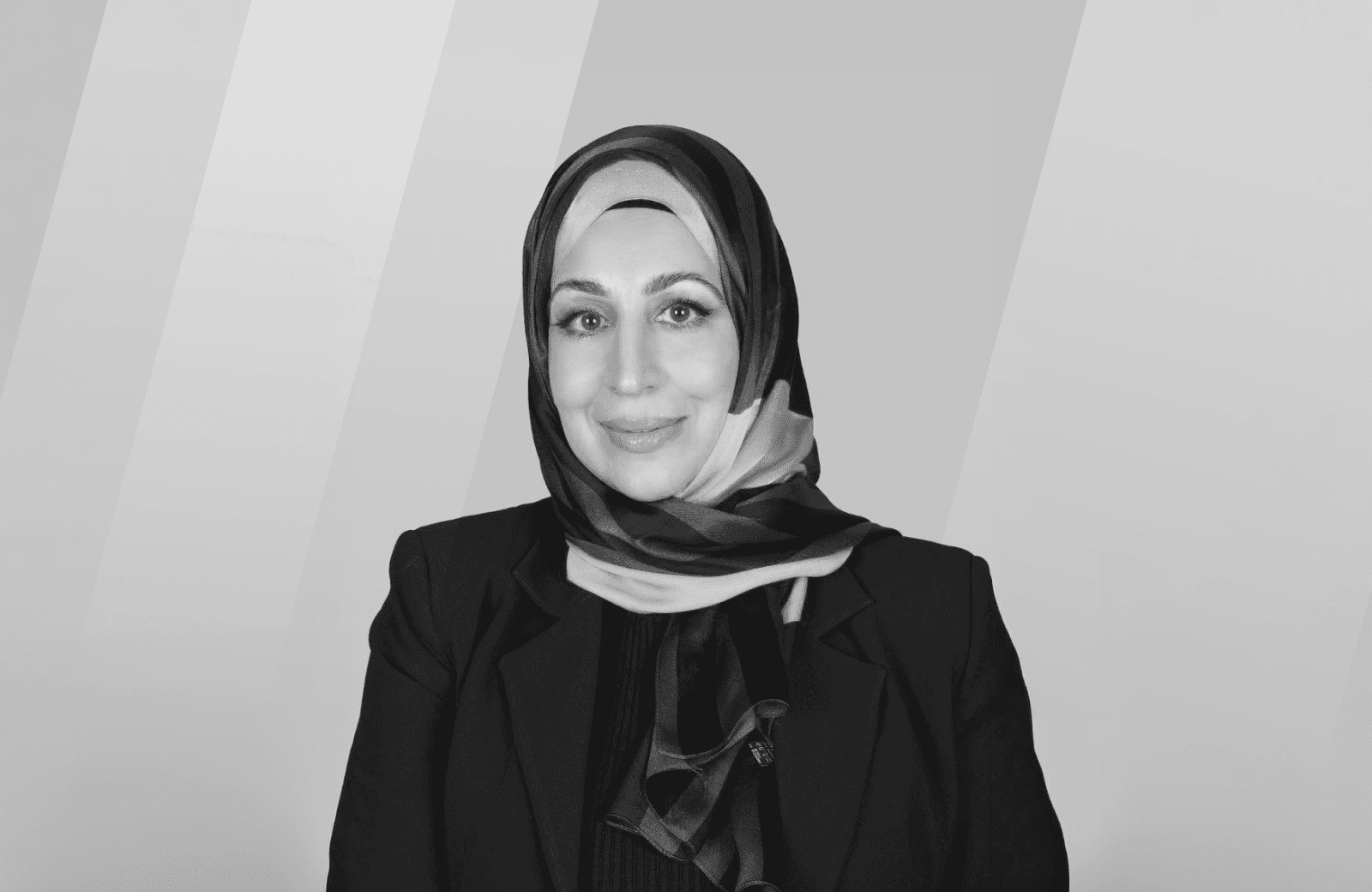
About Mona Mustafa Alsayed
Mona Mustafa Alsayed is Assistant General Manager, Head of Operations Division at the Bank of Bahrain and Kuwait (BBK), with 25+ years of experience modernizing banking operations and strengthening operational controls. She leads BBK’s Operations Division across retail and wholesale functions, including retail and credit services, trade finance, corporate channels and digital payments, treasury back office, and investment services, driving efficiency, resilience, and execution aligned to the bank’s strategic priorities.
Previously, Mona held senior audit and risk roles at BBK, including Operations & IT Audit Executive Head and IT Lead Auditor, leading technology and operations audits across BBK’s international branches. She also spent over a decade at the National Bank of Bahrain in IT audit and technical systems review.
Mona is a Certified Information System Auditor (CISA), member of the Information Systems Audit and Control Association, ISACA Bahrain Chapter, serves on the ICC Bahrain Trade Finance Forum, and represents BBK in the BUNA Advisory Group (the Arab Regional Payments Clearing and Settlement Organization).