KYB Isn't a One-Time Check, It's a Living Profile [Part 1]
Date
Author
Trustform Team
Part 1: KYB Is Not a One-Time Check, It’s a Living Profile
For years, KYC and KYB have been designed around a simple idea: capture the truth about a client at a single moment in time.
Collect the documents. Verify the data. Assess the risk. Request additional documents and verifications. And then some more documents. Approve the client. From that point on, the client is treated as “known.”
But the real world does not operate like that. Businesses change and evolve constantly. Ownership shifts, directors come and go, companies expand into new markets, and risk exposure changes – sometimes subtly, sometimes significantly so. Yet most client due diligence processes remain anchored to the moment of onboarding. What follows is not a lack of compliance effort, but a growing disconnect between what is recorded and what is real.
The Problem with Static KYB
Traditional KYB creates a snapshot. And like any snapshot, it starts to age the moment it is taken.
To compensate, institutions rely on periodic reviews: annual, biannual, or triggered by specific events. But these reviews are inherently reactive. They look backwards, not forwards, and often arrive too late to reflect meaningful change.
In the meantime, teams operate on outdated assumptions, with an all-too-familiar outcome: repeated outreach to clients, duplicated effort across teams, inconsistent data across systems, and an underlying uncertainty about whether the current view of a business is any accurate.
The issue is not execution but the model itself.
From Snapshots to Living Profiles
KYB needs to evolve from a static record into something more fluid. A living profile.
This is not just a conceptual shift – it is a practical one.
A living profile is continuously updated as new information becomes available. Changes in ownership, structure, or risk exposure are reflected as they happen, not months later. External data sources, regulatory updates, and monitoring signals feed into the profile over time, creating a more accurate and current representation of the business.
Instead of asking “was this verified?”, the question becomes “is this still true?”
That shift changes fundamentally how businesses, and compliance teams, operate today: it reduces the need for repeated data collection, improves the quality of decision-making, and creates a more responsive compliance function, one aligned with the pace of modern business environment.
The Natural Next Step: A Client-Managed Business Identity
If KYB becomes a living profile, a more fundamental question emerges:
Who should maintain it?
Today, the burden sits almost entirely with financial institutions and other regulated businesses. Each company builds and maintains its own version of a business profile for each client, often duplicating the same effort across the ecosystem.
But the entity that actually knows the business best, and has the strongest incentive to keep its information accurate, is the business itself.
This is where the concept of client-managed business identity begins to take shape.
Instead of being repeatedly reconstructed by different institutions, the business profile becomes something that is owned and maintained by the client. Information is updated at the source, not rediscovered downstream. Changes in structure, ownership, or documentation can be reflected once and then reused wherever needed.
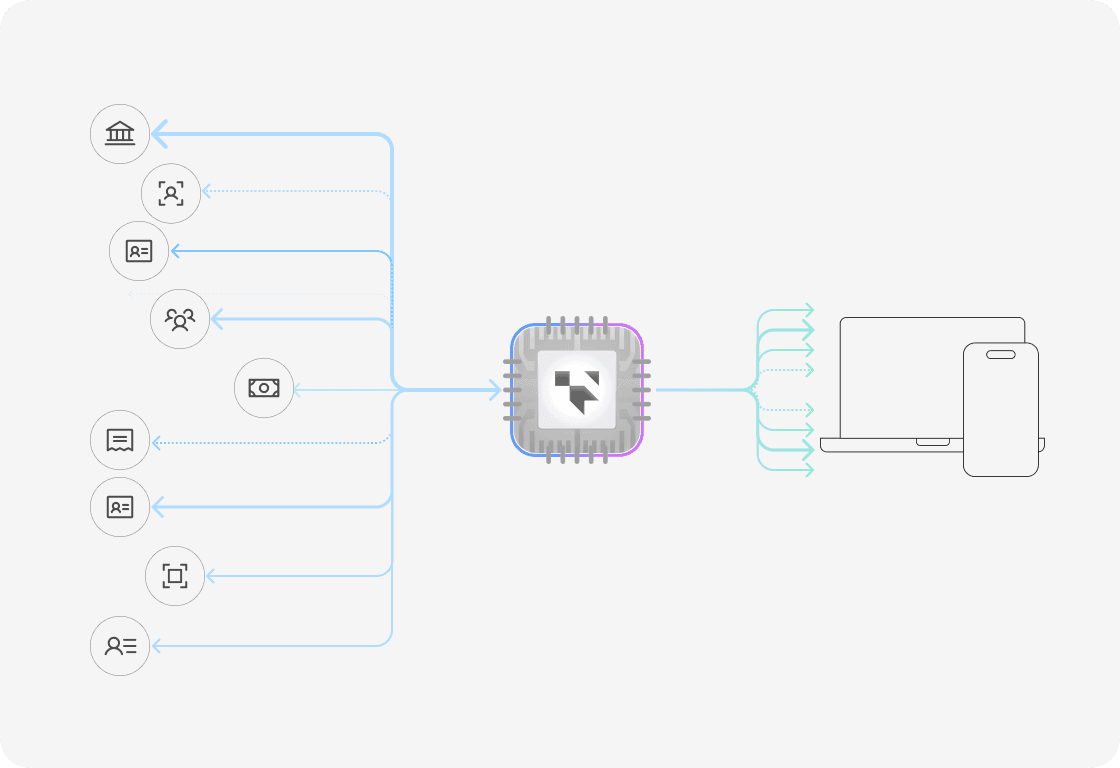
For this to work, the profile needs a proper container. A business identity wallet provides that structure – a secure, persistent environment where business identity data, documents, ownership information, and verification states are held together as a cohesive whole. The profile is not static; it evolves over time, maintained directly by the business, and accessed by institutions when required.
Rather than starting from zero with every onboarding process, institutions interact with an existing, continuously maintained source of truth.
A Shift Already Underway
The move from static KYB to living profiles is not theoretical conceived in our heads, here at Trustform – it is already happening.
Regulators are pushing for more continuous monitoring. Institutions are investing in better data infrastructure. Clients are increasingly resistant to repetitive onboarding processes. And importantly, regulation itself is beginning to recognise the need for more structured, reusable digital identity frameworks.
In Europe, eIDAS 2.0 signals a major step in this direction. By introducing digital identity wallets and establishing standards for trusted, reusable identity across borders, it creates the foundation for identity models that are persistent, portable, and controlled by the holder. While much of the early focus has been on individual identity, the focus is now naturally shifting to embrace business identity as well.
Together, these forces point in the same direction. KYB can no longer, nor should it, be treated as a one-time event. It is becoming an ongoing capability – one that reflects the real, changing nature of businesses, and increasingly, one that is managed closer to the source.
Living KYB profiles are the foundation of that shift.